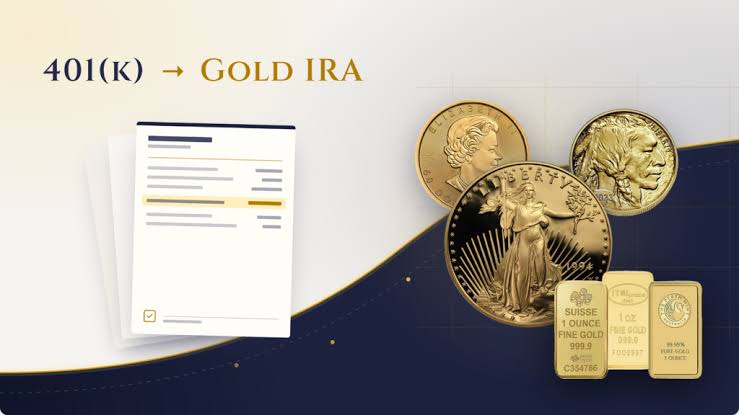
- A direct transfer from a 401(k) to a Gold IRA is tax-free when the check goes to the new custodian—never to you personally.
- IRS requires gold to be at least 99.5% pure, silver 99.9%, platinum and palladium 99.95%—most collector and numismatic coins do not qualify.
- Home storage of IRA-held bullion is illegal per Tax Court 2021 (McNulty v. Commissioner)—the full IRA balance becomes a taxable distribution in the year home storage begins.
- Annual charges typically run $300–$600 including custodian, storage, and insurance—compared to $0 for a gold ETF held in a regular brokerage account.
What Is a Gold IRA and How Does It Differ From a Regular IRA?
A self-directed Gold IRA holds physical bullion rather than stocks, bonds, or mutual funds. Unlike a standard brokerage account, this type of IRA requires two separate entities: an IRS-approved custodian—typically a specialized trust company rather than a conventional bank or broker-dealer—and an IRS-approved depository where the physical holdings are stored. You cannot take personal possession of the bullion while it remains a retirement asset.
The same fundamental tax rules that govern conventional retirement plans apply to a Gold IRA. A traditional Gold IRA receives pre-tax contributions, allowing you a potential deduction in the year of contribution, and distributions in retirement are taxed as ordinary income. A Roth version receives after-tax contributions with no deduction, but qualified distributions in retirement—including any appreciation in the value of the metal—are entirely exempt from tax. Contribution limits, required minimum distribution rules, and transfer rules are identical to those for standard IRAs.
How to Roll Over a 401(k) to a Gold IRA Without Paying Tax
There are two methods for moving money from a 401(k) into a self-directed Gold IRA. A direct rollover is the recommended method: your 401(k) plan administrator sends the funds directly to the new custodian, never passing through your hands. No mandatory withholding is applied, there is no 60-day deadline to meet, and there is no risk of an accidental taxable event. This is the cleanest and safest approach for virtually all investors.
An indirect rollover works differently and carries meaningful risk. Your 401(k) plan issues a check made out to you for the distribution amount, but first withholds 20% for federal income tax. You then have 60 days to deposit the full pre-withholding amount—including the 20% that was withheld—into your new IRA. To avoid a taxable event, you must replace that withheld 20% out of your own pocket. If you cannot replace it, the portion not deposited is treated as a taxable distribution and subject to ordinary income tax plus, if you are under 59½, a 10% early distribution surcharge.
IRS Purity Standards: Which Metals Actually Qualify for a Gold IRA
The IRS sets minimum purity standards for bullion held in a self-directed retirement IRA. Most coins sold in the collectibles market—including many well-known bullion coins—do not meet these standards and are prohibited. Before purchasing any bullion for your self-directed IRA, confirm with the custodian that the specific product qualifies.
| Metal | Minimum Purity | Approved Examples | Not Approved |
|---|---|---|---|
| Gold | 99.5% | American Gold Eagle, Canadian Maple Leaf, PAMP Suisse bars, Credit Suisse bars | South African Krugerrand (91.67%), most numismatic and collector coins |
| Silver | 99.9% | American Silver Eagle, Canadian Maple Leaf, .999 bars from approved refiners | Sterling silver, junk silver coins |
| Platinum | 99.95% | American Platinum Eagle, Canadian Maple Leaf platinum | Coins below 99.95% purity |
| Palladium | 99.95% | Canadian Maple Leaf palladium, PAMP Suisse palladium | Most other palladium products |
Home Storage Gold IRAs: Why They Are Illegal and What Happens If You Try
The U.S. Tax Court ruled definitively in McNulty v. Commissioner (2021) that storing IRA-held bullion at home or in a personal safe constitutes a prohibited transaction under the Internal Revenue Code. The ruling rejected the argument that an IRA holder could use a single-member LLC to take constructive possession of the gold and store it at home. The court found this arrangement violated the rules requiring a qualified custodian to maintain control of retirement IRA assets.
The consequences are severe. When home storage begins, the IRS treats the full fair market value of the IRA as a taxable distribution in that year—not just the bullion removed, but the entire balance. Federal and state income taxes become due, plus interest. If the IRA holder is under 59½, the 10% early distribution surcharge applies on top of ordinary income tax. Charges and interest continue to accrue until resolved.
IRS-Approved Depositories: Where Your Gold Must Be Stored
Physical bullion held in a self-directed Gold IRA must be stored at an IRS-approved depository. Major facilities include Delaware Depository (Wilmington, DE), Brinks Global Services (multiple locations nationwide), Texas Bullion Depository (Austin, TX), and International Depository Services (multiple locations). The custodian will have relationships with one or more approved facilities and will handle the logistics of transferring your holdings to storage upon purchase.
When evaluating storage options, understand the difference between segregated and commingled storage. Segregated storage means your specific coins and bars are stored in a separate, labeled area—when you sell or take a distribution in kind, you receive those exact items. Commingled storage pools your bullion with other clients’ holdings of equivalent weight and purity; when you sell or take funds out, you receive equivalent units, not your specific original coins. Segregated storage is more expensive—typically $50–$100 more per year—but provides higher verifiability. Confirm the IRA includes online access so you can verify your holdings and track your specific gold at any time.
Gold IRA vs. Gold ETF in a Regular IRA: The True 20-Year Cost
Both a physical Gold IRA and a bullion ETF held in a conventional brokerage track the price of gold, and price appreciation is identical in both structures before fees. The meaningful difference is cost. Over a 20-year holding period, the fee gap between the two structures is substantial and compounds significantly.
| Factor | Gold IRA (Physical) | Gold ETF in Regular IRA |
|---|---|---|
| Annual custodian + storage + insurance | ~$500/year flat | $0 |
| ETF annual expense ratio | None | 0.09% (IAU) to 0.25% (GLD) |
| Initial dealer spread | $3,000–$8,000 (3%–8%) | $0 |
| Transaction fees | $50–$100 per buy or sell | $0 most brokerages |
| Estimated 20-year total fee drag | $15,000–$25,000 + spread | $1,800–$5,000 (ETF ratio only) |
| Counterparty risk | None—physical metal | ETF structure and custodian |
| Liquidity | Sell through dealer 1–5 days | Instant market order |
For investors seeking price exposure without the complexity of physical storage, a bullion ETF in a regular brokerage achieves the same objective at significantly lower cost. Physical bullion has genuine advantages—no counterparty risk, a tangible asset that exists independently of any financial institution—but most retirees’ actual planning needs are met by the ETF at a fraction of the cost. The decision between the two should be made with full awareness of the fee gap over a realistic holding period.
Which 401(k) Plans Allow Rollover to a Gold IRA?
The ability to move your 401(k) funds into a self-directed Gold IRA depends on your employment status and plan rules. An active 401(k) at your current employer typically does not allow transfers while you remain employed—the plan assets must generally stay in the plan. Some plans do allow “in-service distributions” for participants over age 59½, which can then move to a self-directed IRA, but this is plan-specific and must be confirmed with your plan administrator directly.
An old 401(k) from a former employer can typically be transferred without restriction. Once you have separated from that employer, the plan has no rule preventing you from moving the balance to a self-directed Gold IRA. A self-employed solo 401(k) offers the most flexibility: solo plans can often hold gold and silver directly within the plan structure or transfer to a Gold IRA with few complications. If you are self-employed, review whether holding bullion inside the solo 401(k) itself—rather than moving to a separate IRA—might achieve the same objective with simpler administration.
Is a Gold IRA Rollover Right for You?
| Consider it if… | Think twice if… |
|---|---|
| You want physical bullion ownership with no counterparty risk—the gold exists independently of any financial institution | Your primary goal is price exposure—a bullion ETF in a regular brokerage achieves that at 10%–20% of the annual cost |
| You are moving funds from an old employer’s 401(k) where they are sitting idle and you want to diversify away from paper assets | You are still employed at the plan’s sponsor—most active 401(k) plans do not allow transfers while employed, except in-service distributions after 59½ |
| Your balance is large enough that the fixed annual charge ($300–$600/year) represents a small percentage—on $200,000+, 0.25% annual drag is comparable to a gold ETF | Your balance is under $50,000—at $25,000, a $500/year fee is 2.0% annually before the dealer spread, a significant drag on any investment |
| You have confirmed both the custodian on the IRS approved list and an IRS-approved depository with segregated storage and online access | Any company involved is marketing “home storage,” “checkbook IRA,” or numismatic coins as appropriate—these are red flags for prohibited transactions or inflated markups |
| You plan to take in-kind distributions at retirement (receiving physical coins or bars rather than cash)—only a physical Gold IRA allows this | You want simplicity and liquidity—selling physical bullion through a dealer takes 1–5 days; selling a bullion ETF takes seconds at market price |
Moving 401(k) funds to a self-directed Gold IRA is a legitimate strategy for the right investor, but it is not a default upgrade. Use a direct transfer exclusively—have the check sent to the new custodian, never to you personally. Confirm the specific custodian at IRS.gov, confirm the depository by name and facility address, and get every charge in writing before signing any agreement. For investors whose goal is portfolio insurance through physical bullion ownership and who have a balance large enough to absorb the annual cost structure, the self-directed IRA is a viable tool. For those seeking price exposure or comparing costs carefully, the ETF alternative deserves serious consideration first.